

Skill gaps are starting to show under these market conditions, even for teams that look complete on paper. That’s why more leaders are shifting from reactive hiring to intentional team design.
Follow this 3-part strategy to hire for impact, not coverage.
Audit Current Talent Competencies

Start by assessing your current team through the lens of what the business needs to achieve in the near term and over the next 12 to 18 months. Then, identify who consistently delivers under pressure, where skill gaps persist, and whether you’re relying too much on a few key individuals to carry the weight.
Consider:
- Do you have the right mix of technical expertise, leadership potential, and capacity to meet upcoming demands?
- Are there performance issues or development bottlenecks that are limiting growth?
- Have you unintentionally outgrown parts of your existing structure?
Don’t overlook cross-functional dynamics. For example, you’re hiring a Controller who will partner closely with Operations. Take the time to align with your COO or President on what excellence looks like in that relationship. Their input can shape a more targeted and effective hiring process.
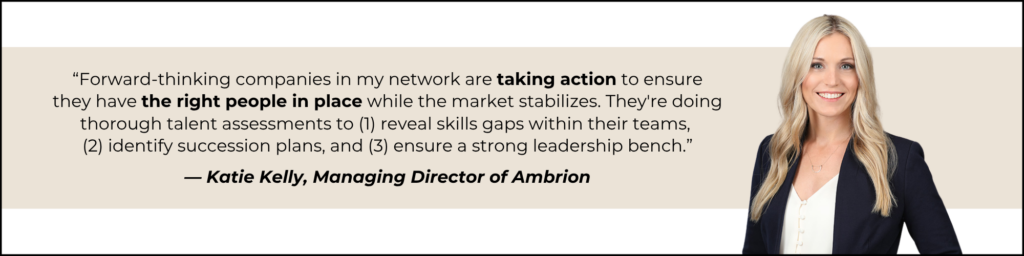
Finally, engage your team directly. Their insights can uncover operational pain points, clarify bandwidth challenges, and help determine whether you need a steady-state contributor, a transformational leader, or both.
Clearly Define Success for the Role
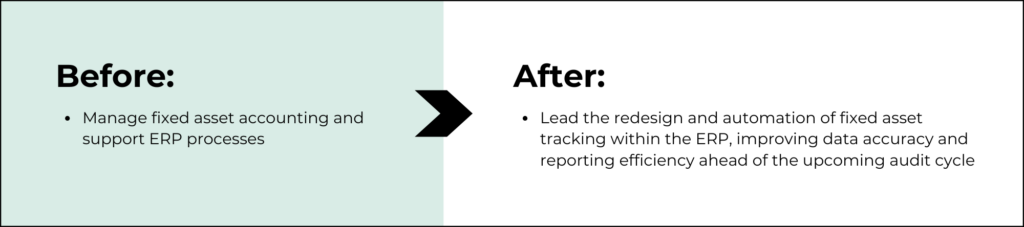
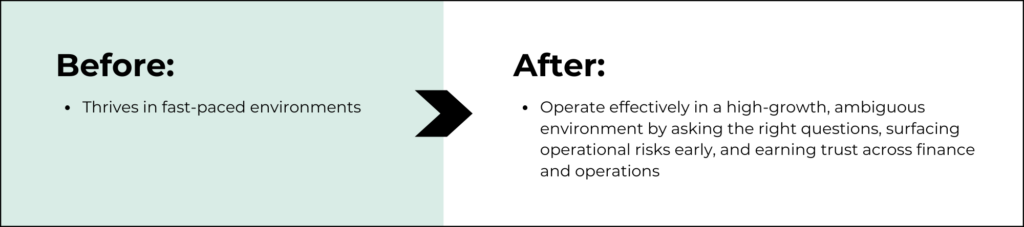
With a clear understanding of your team’s needs, the next step is to articulate what success looks like, specifically, and in measurable terms.
Strong job descriptions go beyond generic task lists or recycled postings. Instead, they define the expected impact the individual will make within the first 6 to 12 months. The best descriptions also show how this aligns with broader business priorities.
For Example:
Defining the role clearly helps top candidates quickly assess fit. It also increases your chances of attracting talent who is energized by the challenges and expectations of the role.
Show Up Strategically in the Talent Market
With the role defined, take a strategic pause. How competitive is the profile you’re targeting, and what will it take to attract someone of that caliber? This is where collaboration with a trusted HR leader or recruiting partner is essential.
Use their market expertise to align expectations around:
- Compensation benchmarks relative to the skills and experience required
- Typical time-to-fill for similar roles in your industry or region
- Likely trade-offs, whether in technical depth, industry background, or leadership experience
Equally important is how you position the opportunity in the market. What narrative are you sharing about the team, the impact of the role, and the growth trajectory available? Why would a high-performing accounting or finance professional choose this opportunity over others?
Strong leadership and compelling missions draw top candidates. Job specs alone don’t. Be ready to share:
- Clear stories of team success and advancement
- What makes your leadership style effective and distinctive
- How the role connects to meaningful business outcomes
Then, turn your attention to the candidate experience.
Senior-level talent is evaluating your company just as closely as you’re evaluating them. Your interview process should be efficient, transparent, and reflect the culture you want to project.
- Are expectations communicated clearly?
- Is the process appropriately rigorous without being excessive?
- Do interviewers represent the company’s values and leadership style?
The way a process feels often sets the tone for a candidate’s decision. A thoughtful, well-orchestrated experience reinforces your brand. It’s also the difference between landing your first-choice candidate and losing them to a competitor.
Final Thoughts
Getting the right people in place starts with having a solid strategy.
Drill down on what your team needs to thrive. Think about who else should weigh in. And make sure the process attracts the kind of person who will raise the bar, not just meet it.
Related Blogs You’ll Enjoy
- How to Structure an Effective Interview
- From Offer to First Day: 6 Preboarding Steps for Managers
- 10 Steps to Onboard New Employees