

Congratulations! You’ve extended a job offer to a candidate, and they’ve accepted! Now comes the fun part: preboarding and onboarding. In this blog, we’ll cover 10 steps managers can take to welcome an employee to the team.
Preboarding

Preboarding (also referred to as pre-onboarding) is about the actions you (the hiring manager) take between “I accept the offer!” and your new hire’s first day. Think of it as rolling out the welcome mat.
Step 1: Build the Connection
HR will send their standard communications, but you (the hiring manager) should also personally reach out. Send a warm email right after they accept and sign the offer letter to start building rapport.
Here’s an example:
| “Caleb, I’m thrilled you’ll be joining our team! While HR will handle the official paperwork, I wanted to personally say how excited we are to have your expertise on our team. I’ll give you a call tomorrow to chat about the next steps.” |
Step 2: Share the First-Day Details
Eliminate first-day jitters by painting a clear picture of what to expect. Send a detailed first-day plan that includes:
- What time to arrive and where to park
- Building access details and who will greet them
- Lunch plans (if applicable)
- Office dress code
- A complete schedule for day one, broken down by hour
Step 3: Organize Their Workspace
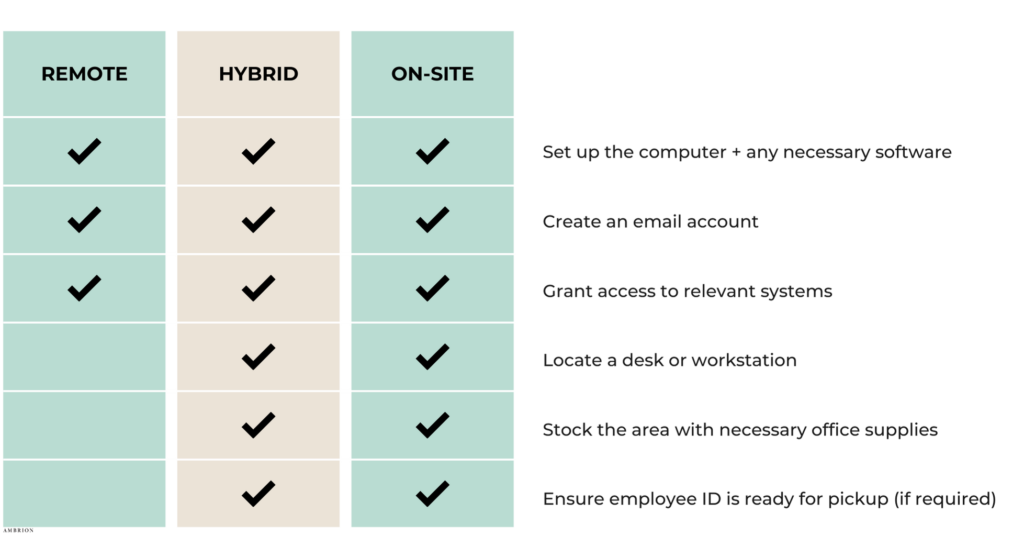
Nothing says “we weren’t ready for you” like a dusty desk or an incomplete training manual. A well-organized workspace (whether physical or digital) shows new hires that you value their time and are committed to a smooth transition into their role. Use the chart below as a guide to ensure you’ve covered all the essential details for on-site, hybrid, and remote employees.
Onboarding for the First Day
Focus on these key steps to ensure a positive, memorable first day that leaves your new person feeling supported and excited about their future with the company.
Step 4: Schedule a Welcome Meeting
Lay the groundwork for a positive working relationship by dedicating time to connect first thing on day one. Introduce the new employee to the business, explain how their role fits into the bigger picture, and discuss what to expect during onboarding. Use this time to share your leadership style, communication preferences, and any upcoming projects you’re excited about.
Step 5: Assign an Onboarding Buddy
Pairing your new hire with an onboarding buddy helps them navigate their first day. Pick someone approachable who knows the ropes and enjoys helping others. The buddy can make introductions, answer non-manager questions, and provide a friendly face in an unfamiliar environment.
Onboarding for the First Week
The first week of onboarding is an opportunity to immerse your new hire in the company culture, provide essential training, and help them build relationships with their peers.
Step 6: Assign Small, Achievable Tasks
Give your new hire early wins to help them feel productive right away. If your company has a formal training program, walk them through it step-by-step. If training is more fluid, assign small, manageable tasks.
As an example, here are tasks some of our clients have assigned in the first week:
- Review historical resources
- Become familiar with where to pull data
- Shadow meetings and people
- Read any documentation related to the role

Step 7: Plan a Team Welcome Event
Infuse some fun into your new hire’s first week! Organize a team lunch, coffee break, or virtual meet-and-greet to break the ice and build camaraderie.
Keep it informal so team members can share their roles and personalities outside of a formal presentation setting. Fostering these connections early helps your new hire feel like part of the team right out of the gate.
Step 8: Schedule Check-In Meetings Once Daily
Daily touchpoints during your new employee’s first week keep them on track and reassure them that they aren’t alone. Use these quick 15-minute recaps to:
- Celebrate small wins
- Recognize good effort
- Clarify expectations
- Answer any questions that popped up during the day
Onboarding for the First 90 Days
We often see one major trend during this timeframe: increased turnover. To keep your newest and best talent engaged for the long haul, keep these practices front and center.
Step 9: Prioritize Clear and Consistent 1:1 Meetings
Stick to a predictable schedule for your 1:1 meetings throughout the entire 90-day window. Use this dedicated time to review progress, offer constructive feedback, set future goals, and ask open-ended questions like:
| “What’s stretching you outside your comfort zone right now?“ |
Consistency shows your new hire that their growth and success are top priorities for you.
Step 10: Encourage Cross-Functional Exposure
Help your new hire build their internal network by introducing them to key partners in adjacent departments. Whether it’s scheduling quick virtual coffee chats with sales, marketing, or operations partners, getting cross-functional exposure helps your employee understand how their work impacts the broader business and helps them navigate company workflows much faster.
Final Thoughts
A high-impact onboarding strategy does not require an enterprise budget or a massive HR overhaul. It simply requires intentional planning, structured communication, and a genuine commitment to supporting a new team member through a major professional transition.
By taking personal ownership of your new hire’s preboarding, schedule, and social integration, you protect your hiring investment, dramatically cut ramp-up time, and build a culture where top talent stays and thrives.
Related Resources
- Free Download: Onboarding Checklist
- The Manager’s Guide to Effective One-on-One Meetings
- How To Develop Your Leadership Style